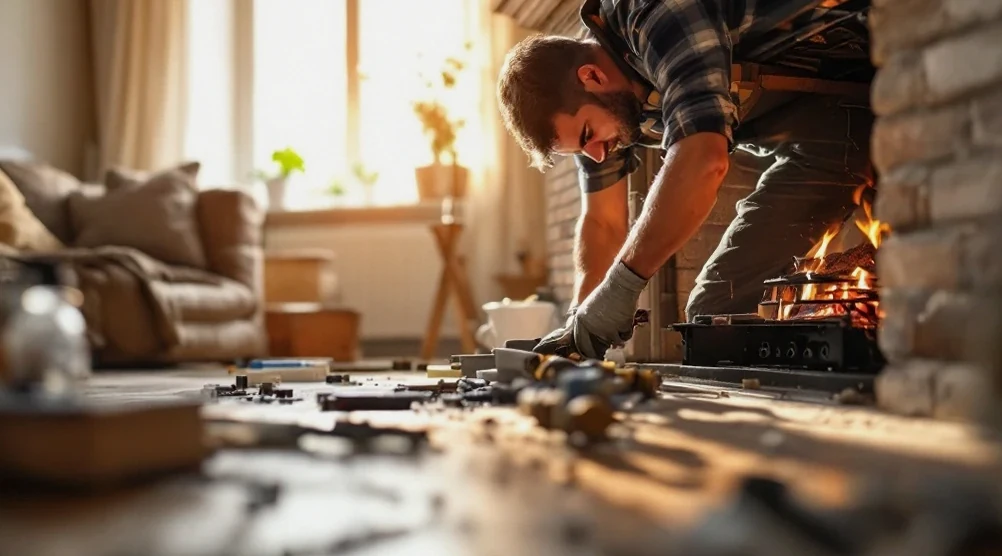
What is Gas Fireplace Repair and how does it work?
Gas fireplace repair is the process of diagnosing and fixing issues with your gas logs, burner, ignition system, or venting. It's not just about lighting a pilot light; it's about making sure every component works safely and efficiently.
Think of your gas fireplace as a small appliance that happens to live inside your wall. It has a gas line, a burner, an ignition source, and a vent or chimney to carry out exhaust. When something goes wrong, it's rarely a single dramatic failure. More often, it's a small problem that gets worse over time: a dirty burner that won't light evenly, a thermocouple that's worn out, or a vent that's blocked by debris.
In Huntsville, where winters can get cold, people lean on their gas fireplaces for extra heat. That means the equipment gets used hard for several months, then sits idle through the summer. That cycle of heavy use and long rest is exactly what causes many of the issues we see. The good news is that most problems are fixable, and catching them early is far cheaper than waiting.
A proper repair starts with a thorough inspection. We look at the burner, the logs, the ignition system, the gas pressure, and the venting. We also check for cracks in the interior fireplace structure, which can be a serious safety issue. One technician we know spotted a crack in a customer's interior fireplace and told them they had maybe two years before they'd need to repair it, possibly at a cost of $200. (angi.com)
- Gas fireplace repair covers ignition, burner, gas valve, and venting issues.
- Regular inspections catch small problems before they become expensive.
- A neglected chimney or vent can lead to thousands in repair costs. (a1chimneyspecialist.com)
Short version
- Gas fireplace repair is about safety and efficiency, not just getting the flames going.
- Most issues stem from dirty burners, worn ignition parts, or blocked vents.
- A small crack today can turn into a $200 repair in a couple of years. (angi.com)
How Gas Fireplace Repair works, start to finish
We start with a visual inspection, then test the gas pressure and ignition, clean the burner and logs, and check the venting. If a part is faulty, we replace it with the right component and test the whole system again.
The first thing we do is fire up the fireplace and watch what happens. Does the pilot light catch? Does the burner light evenly? Is there any soot or odd smell? Those observations tell us a lot before we even open a tool bag.
Next, we check the gas pressure at the valve. Low pressure can cause weak flames or delayed ignition. High pressure can damage the burner. We use a manometer to get an exact reading, and we compare it to the spec on the nameplate. If the pressure is off, we adjust the regulator or look for a problem in the gas line.
Then we pull the logs and clean the burner. Over a season, dust, pet hair, and spider webs can clog the burner ports. That causes uneven flames and can lead to soot buildup inside the firebox. We also inspect the thermopile and thermocouple, the two safety devices that sense the pilot flame. If they're worn, the fireplace might not stay lit, or it might shut off randomly.
Finally, we inspect the venting. For a vented gas fireplace, that means checking the chimney or direct vent for blockages. For a vent-free unit, we check the oxygen depletion sensor. A blocked vent can push carbon monoxide into your living room, which is not a scenario you want to test. That's why we take venting seriously.
Once the repair is done, we run the fireplace through a full cycle, from ignition to shutdown, and check for any leaks with a soapy water solution on the gas line connections. If everything passes, we hand it back to you with a clear explanation of what we found and what we did.
- Inspect the firebox.Look for cracks, soot, or rust on the interior surfaces. A hairline crack can widen over time, leading to a $200 repair down the line. (angi.com)
- Test the ignition.Check the pilot light, thermocouple, and thermopile. If the pilot won't stay lit, it's often a worn thermocouple, not a gas problem.
- Clean the burner and logs.Remove dust and debris from the burner ports. Clean logs are not just cosmetic; they burn cleaner and last longer.
- Check the venting.Make sure the chimney or direct vent is clear. A blocked vent can cause carbon monoxide to enter the home, which is a serious health risk.
- Test the system.Run a full cycle to confirm proper ignition, flame pattern, and shutdown. Check all gas connections for leaks.
Why Gas Fireplace Repair matters for your home
Regular gas fireplace repair keeps your home safe from carbon monoxide leaks and fire hazards, and it saves you money by catching small issues before they turn into expensive failures. A neglected system can cost thousands in repair costs. (a1chimneyspecialist.com)
Your gas fireplace is a convenience, but it's also a piece of machinery that uses flammable gas and produces combustion byproducts. If it's not working right, you might not notice for a while. The pilot light might be a little weak, or the flames might be yellow instead of blue. Those are signs that something is off, and ignoring them can lead to a bigger problem.
For example, a cracked interior fireplace might not bother you at first. You might see a hairline crack and think it's just cosmetic. But over time, that crack can widen, letting heat escape where it shouldn't or allowing moisture in. One technician told a customer they had about two years before they'd need to repair it, with a potential cost of $200. (angi.com) That's a small price compared to what a full rebuild would cost if you let it go.
There's also the safety angle. A gas fireplace that isn't venting properly can release carbon monoxide into your home. That's a colorless, odorless gas that can cause headaches, dizziness, and worse. We test for it during every service call, and we've caught it more than once. It's not about scaring you; it's about the fact that a $150 service call is a lot cheaper than a hospital visit.
Finally, a well-maintained fireplace runs more efficiently. Clean burners and proper gas pressure mean complete combustion, which means more heat for your money. In Huntsville's damp winters, that extra warmth matters. Plus, a fireplace that's in good shape adds value to your home, not just comfort.
Yellow flames or soot
This means incomplete combustion. Could be a dirty burner or a gas pressure issue. Get it checked before it gets worse.
Pilot light won't stay lit
Often a worn thermocouple. It's a cheap fix, but if you ignore it, you'll be lighting the pilot manually every time.
Crack in the firebox
A crack can allow heat to escape or let moisture in. You might have a couple of years, but it will eventually need a repair that could cost $200 or more. (angi.com)
Common problems and what causes them
Most gas fireplace issues come down to dirty burners, worn ignition parts, gas pressure problems, or blocked venting. Here's what we see most often in Huntsville homes and what typically causes each one.
One of the most common calls we get is a fireplace that won't light at all. That's usually a dead thermocouple or thermopile. These are small safety devices that sit in the pilot flame and generate a tiny electrical current to keep the gas valve open. Over time, they wear out, especially if the pilot flame is too high or too low. Replacing them is straightforward, but it requires the right part and careful installation.
Another frequent issue is a burner that lights but has weak or uneven flames. That's almost always a dirty burner. Dust, pet hair, and even lint from laundry can clog the small ports where gas comes out. We've pulled everything from a dead cricket to a wad of dryer lint out of a burner. Cleaning it takes about thirty minutes, but it makes a world of difference in how the fire looks and how much heat it puts out.
Sometimes the problem is with the gas line itself. Low pressure can be caused by a faulty regulator or a partially closed valve. High pressure can be the result of a bad regulator too. We check pressure with a manometer and adjust as needed. If you've ever heard a popping sound when you turn the fireplace on, that's often a gas pressure issue.
Venting problems are less common but more serious. A bird's nest or leaves can block a chimney cap, or a direct vent pipe can get disconnected. That can cause carbon monoxide to back up into your home. We always inspect the venting as part of a repair, and we recommend a yearly check, especially before the first cold snap. A neglected chimney can end up costing you thousands in repair costs. (a1chimneyspecialist.com)
- Dead thermocouple or thermopile: fireplace won't stay lit.
- Dirty burner ports: uneven flames, soot, and low heat.
- Gas pressure issues: weak flames, popping sounds, or delayed ignition.
- Blocked venting: carbon monoxide risk, always check before winter.
A small crack today can turn into a $200 repair in a couple of years. (angi.com)
Sources
Need gas fireplace repair in Huntsville? Get a free estimate today.
📞 256-524-0557